
conscious capital
The Economics of Dignity: Why Affordable Housing Belongs in Every Impact Portfolio

Ajay Wasserman,
Founder, author, host of Conscious Capital
6 minutes
11 August 2026
Listen to the podcast here
Audio Title: The Economics of Dignity Why Affordable Housing Belongs in Every Impact Portfolio
Description:Discover why affordable housing is a vital impact investment. Explore how sustainable homes create a foundation for economic stability, health, and dignity.
Table of Contents
Introduction
A home is never only a structure.
It is where a person prepares for work, raises children, cares for ageing parents, recovers from illness and imagines a future. When that home is safe, secure and connected to opportunity, it becomes a platform for stability. When it is distant, overcrowded, unsafe or financially crushing, it becomes a permanent tax on the household.
This is why affordable housing belongs in every serious impact portfolio. Few assets influence health, education, transport, household wealth, employment and dignity at the same time. The challenge is that we often measure the wrong thing. We ask how cheaply a unit can be built when we should be asking what it costs a family to live there, and whether the development will still work ten or twenty years after completion.
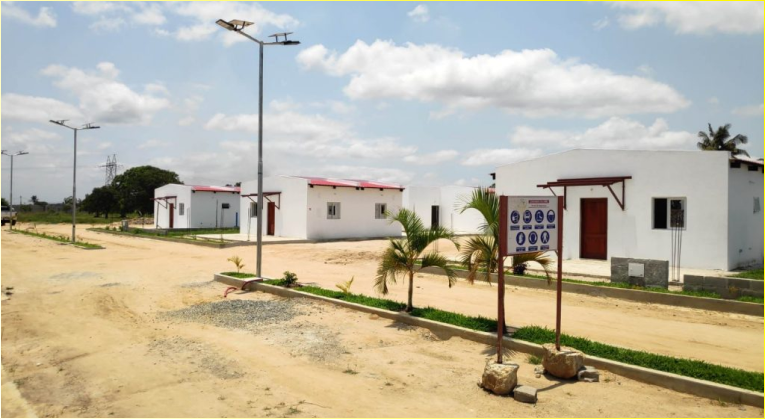
Casa Real’s cyclone-proof affordable homes in Beira, Mozambique
Source: casareal
The Real Cost of a Home
A low purchase price does not automatically make a home affordable.
If the property is far from jobs, schools, clinics and public transport, the household may save on rent and lose the difference through daily travel, unreliable connections and hours of unpaid time. Poor construction creates another hidden bill through maintenance, energy use, heat, water interruptions and exposure to flooding.
True affordability must therefore be measured against the full household budget: rent or repayment, transport, utilities, maintenance, insurance and the economic value of time. It must also include security of tenure. A family cannot plan beyond the next month if it faces arbitrary increases, eviction or uncertain rights.
A project can meet a technical definition of affordability and still make the resident poorer.
Location Is Part of the Balance Sheet
We tend to separate housing from economic development. In reality, where people live shapes which jobs they can accept, whether they arrive reliably, how children perform at school and whether small enterprises can operate from or near the home.
A well-located development creates demand for local shops, childcare, transport, maintenance and community services. Construction jobs matter, but the deeper impact is the economic activity that remains after the builders leave.
This is why cheap land on the urban edge can be an expensive investment. The developer records a lower input cost while the household absorbs years of transport expense and the city inherits the need to extend roads, water, electricity and public services over a greater distance.
Location is not an impact extra. It is part of the asset’s economics.
Africa’s Missing Housing Middle
Demand for affordable housing is visible across the continent. What is missing is a finance and delivery system that can convert that demand into homes people can sustain.
Many households earn too much to qualify for deeply subsidised housing but too little, or too irregularly, for a conventional mortgage. They may have paid rent reliably for years, yet their income does not fit a lender’s preferred documentation. Developers face slow approvals, uncertain land rights, bulk-infrastructure costs and expensive construction finance. Traditional capital responds by moving upmarket, where margins are wider and buyers are easier to underwrite.
The result is a housing version of the missing middle: real demand, real payment behaviour and very limited access to suitable capital.
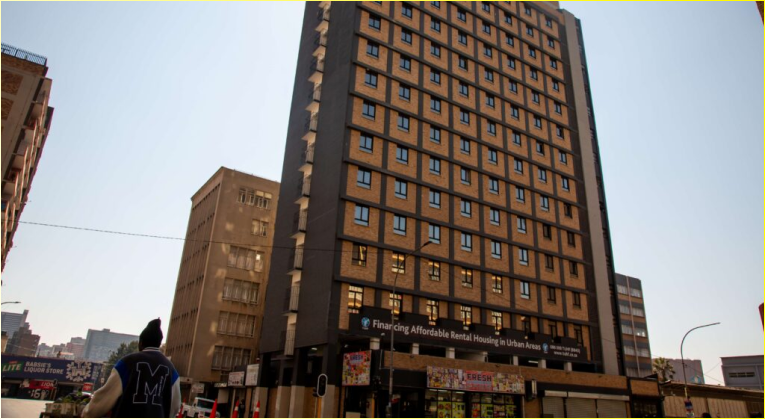
TUHF finances inner-city affordable rental apartments for the missing middle
Source: TUHF
Build a Housing System, Not a Housing Product
No single tenure model will serve every household.
Long-term rental can work for people who need flexibility or are not ready for ownership. Rent-to-own can create a payment history and a credible path to purchase. Serviced plots and incremental housing can allow families to improve a home over time. Employer-linked developments can combine predictable demand with access to work. Mixed-income projects can support shared infrastructure without concentrating poverty in isolated locations.
The point is not to declare ownership morally superior to renting. The point is to give households secure, realistic choices and to match the product to income patterns, life stage and location.
Choice is part of dignity. So is the ability to change that choice as circumstances improve.
Put Each Risk Where It Belongs
Affordable housing fails when every delay and inefficiency is pushed into the resident’s monthly payment.
Public capital is often best placed to support land assembly, enabling infrastructure and planning certainty. Catalytic funding can absorb early development risk or test new tenure and underwriting models. Senior debt can finance predictable construction and rental cash flows. Patient equity can support long-term ownership and professional management. Guarantees can help lenders serve households with reliable but non-traditional income records.
The World Bank’s Inclusive Housing Finance Programme in Egypt shows what coordinated capital architecture can achieve. More than 700,000 subsidies have been delivered to low-income households across all 27 governorates, and 65% of beneficiaries were first-time borrowers. The significance is not only the scale. It is that policy, subsidy, mortgage access and institutional capacity were designed as one system.
Concessional capital should not hide a project that does not work. It should carry a specific risk that commercial capital cannot reasonably absorb, allowing the rest of the project to be financed on disciplined terms.
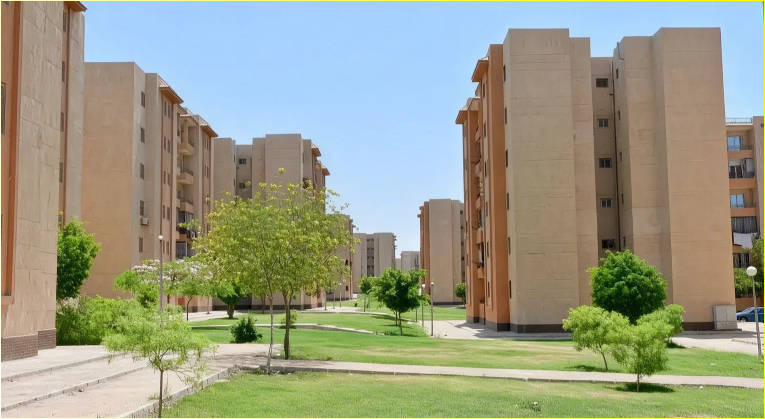
World Bank capital coordinates Egypt’s Inclusive Housing Finance Programme
Source: World Bank Group
Underwrite the Life of the Development
Investors often underwrite the building and treat the resident as a demand assumption. A conscious housing investor must underwrite the household, the place and the operator.
- Can residents afford the total monthly cost without sacrificing food, healthcare or education?
- How much income and time will transport consume?
- What happens when a household experiences temporary income loss?
- Are increases predictable? Is there a funded maintenance reserve?
- Can the operator collect fairly, resolve disputes and keep the property safe?
The investment dashboard should track occupancy, arrears and arrears cures, maintenance response times, utility costs, resident turnover, access to jobs and services, and whether the development is displacing an existing community. A full building with deteriorating services is not a successful asset. It is a delayed liability.
Returns Should Come From Better Operations
Housing can produce durable, long-duration cash flows because the need for shelter does not disappear with market fashion. That defensiveness must never become permission to extract excessive returns from a captive need.
The strongest models create value through efficient construction, sensible density, lower operating costs, professional management and communities that remain desirable over time. They do not depend on deferred maintenance, hidden charges or scarcity that leaves residents with no alternative.
This distinction matters. Returns should arise because the asset works better for longer, not because the resident has nowhere else to go.
Dignity Is an Economic Outcome
Affordable housing is sometimes treated as the social allocation in an impact portfolio: worthy, necessary, but separate from the real work of economic development.
That view misses the point. Housing connects people to cities, jobs, education, healthcare, ownership and community life. It can strengthen household resilience and create a base from which local businesses grow.
Investing well requires patience and coordination across land, infrastructure, finance and management. It also requires a moral boundary: no family should secure a roof by surrendering the rest of a dignified life.
Dignity is not separate from the economics of housing. It is one of the clearest tests of whether those economics are sound.