
conscious capital
The Missing Middle: Why Africa’s Most Important Businesses Are Still Starved of Growth Capital
Ajay Wasserman,
Founder, author, host of Conscious Capital
12 minutes
14 July 2026
Listen to the podcast here
Audio Title: The Missing Middle: Why Africa’s Most Important Businesses Are Still Starved of Growth Capital
Description:Discover why Africa’s "missing middle" businesses struggle to access growth capital, and how conscious investing can unlock the continent's economic potential.
Table of Contents
Introduction
Africa does not have a shortage of businesses.
It has a shortage of capital willing to stay with a business after it has survived, but before it has become large enough to be considered safe.
We hear a great deal about start-ups.
We celebrate young founders raising their first round of funding. We follow the race to build Africa’s next unicorn. At the other end of the market, we see large corporations, infrastructure projects and multinational transactions attracting billions of dollars.
But between the start-up and the multinational sits an enormous group of businesses that receives far less attention.
These are not ideas written on the back of a napkin.
They are functioning companies with customers, employees, equipment, contracts and years of operating experience. They manufacture products, distribute food, provide healthcare, build homes, transport goods, process agricultural produce and supply larger corporations.
Many employ 30, 100 or even several hundred people.
They have already demonstrated that their businesses can work. What they need is capital to expand into another province, purchase additional machinery, increase inventory, fulfil a large contract or build a stronger management team.
Yet when they approach the financial system, they often discover that they belong nowhere.
They are too large for microfinance.
- Too established for many start-up programmes.
- Too small for traditional private equity.
- Too risky for commercial banks.
- And too ordinary for venture capital investors searching for rapid, technology-driven growth.
This is Africa’s missing middle.
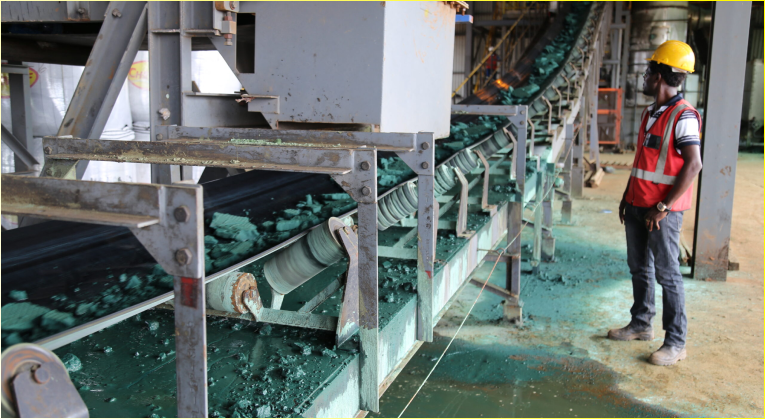
Big sectors in Africa are still starved of capital, despite interest in Africa’s rich Minerals.
Source: Samir Tounsi / AFP
Too important to remain invisible
The missing middle is difficult to define by one revenue figure or investment size. The definition changes across countries, sectors and currencies.
But the experience is remarkably consistent.
The business has moved beyond survival. It may already be profitable and employ a meaningful number of people. It has an opportunity to grow, but it cannot access capital on terms that match the realities of that growth.
British International Investment estimates that Africa’s SME financing gap is approximately $331 billion. It describes these businesses as being too large for microfinance while often lacking the collateral, credit history or scale required by traditional lenders.
This is not a small or peripheral part of the economy.
Globally, micro, small and medium-sized enterprises represent more than 90% of firms and account for approximately 70% of employment.
The contradiction becomes even clearer when we look at South Africa. MSMEs generate approximately 60% of the country’s jobs and around 34% of its economic output, yet only about 5% of formalised MSMEs have access to credit.
We therefore expect smaller businesses to create employment, broaden the tax base and drive inclusive growth while denying most of them the financial tools required to do so.
That is not merely a finance problem.
It is a development problem.
Why banks struggle to finance growth
Traditional banks are primarily designed to protect capital rather than build businesses.
That is understandable. Banks manage depositors’ money and must apply strict risk controls. Their lending decisions are often based on collateral, historical financial statements and predictable repayment capacity.
The problem is that many growing African businesses do not hold their value in the form banks prefer.
Their value may sit in customer relationships, purchase orders, specialist knowledge, distribution networks or contracts that will produce future cash flow.
- A manufacturer may have a confirmed order from a large retailer but lack the working capital to purchase raw materials.
- A healthcare company may have strong patient demand but no property to offer as security for a new clinic.
- An agricultural processor may have access to thousands of farmers but need equipment before it can move from selling raw produce to exporting finished products.
The opportunity may be real.
The security is not always traditional.
Banks frequently respond by offering short repayment periods, requiring personal guarantees or charging interest rates that remove much of the economic benefit of the expansion.
The entrepreneur receives capital, but the structure of the capital makes growth more dangerous rather than less.
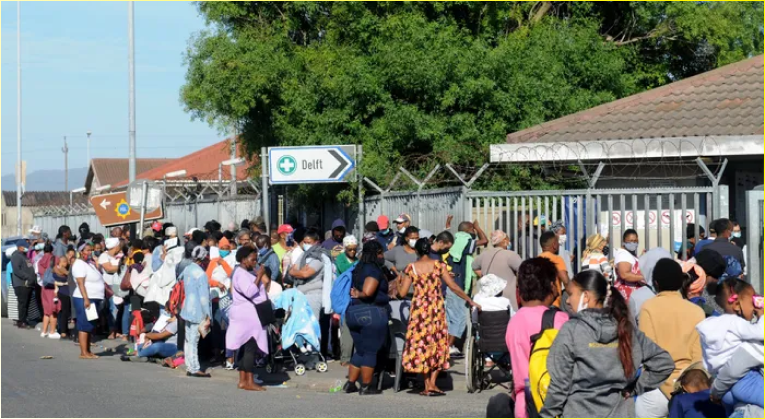
Demand for clinical healthcare outweighs capital expanse.
Source: Ayanda Ndamane/African News Agency(ANA)
Why private capital also passes them by
Private equity and venture capital are supposed to finance businesses that banks cannot.
But their own economics create another barrier.
Conducting proper due diligence on a $2 million investment can require nearly as much time, legal work and management attention as conducting diligence on a $20 million investment.
A fund must therefore ask a simple question: why complete ten smaller investments when one larger transaction can deploy the same amount of capital?
The result is a gradual movement towards larger deals.
Even funds established to support SMEs can find themselves moving upmarket because larger investments are easier to manage and more attractive to their own investors.
Venture capital has brought valuable innovation and ambition to Africa, particularly in financial technology, commerce and digital infrastructure. But the venture model is designed around a specific type of company.
It seeks businesses capable of exponential growth, large addressable markets and highly profitable exits.
A profitable regional logistics company, food processor, medical supplier or industrial manufacturer may create hundreds of jobs and strengthen an entire value chain without ever becoming a unicorn.
It can be an excellent business without fitting the venture capital model.
Africa’s economies cannot be built only by companies that can scale through software.
Someone still has to grow the food, manufacture the packaging, maintain the machinery, transport the products, train the workers and deliver the healthcare.
These businesses may not always produce exciting headlines.
They produce functioning economies.
The real cost of the capital gap
When a good business cannot access growth capital, it does not necessarily collapse.
Often, it simply remains smaller than it should be.
- A manufacturer continues operating with one production line instead of three.
- A farmer sells raw produce rather than processing it locally.
- A logistics company turns away contracts because it cannot finance additional vehicles.
- A clinic remains in one community instead of expanding into five.
- A local supplier loses a corporate contract because it cannot carry the cost of fulfilling the order while waiting 60 or 90 days for payment.
From a distance, these may look like individual business decisions.
Together, they represent millions of jobs that are never created, industries that never deepen and communities that remain dependent on imported goods.
The finance gap becomes a productivity gap → The productivity gap becomes an employment gap → And the employment gap eventually becomes a social and political problem.
This is why the missing middle matters so deeply.
These companies are often precisely the businesses capable of absorbing large numbers of workers who will never be employed by a technology start-up or multinational corporation.
They are also more likely to purchase locally, develop domestic suppliers and keep economic activity within their communities.
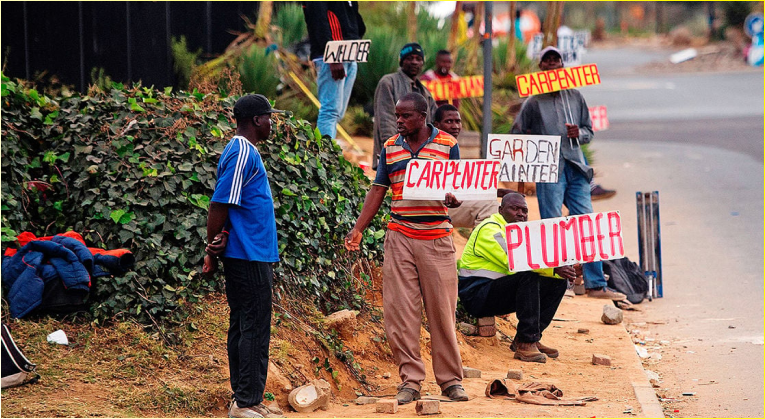
The capital gap inevitably creates a severe employment crisis.
Source: The Economist
Capital must be designed for the business
The answer is not simply to lend more money.
Poorly structured capital can destroy a healthy company.
Africa needs financial instruments designed around how businesses actually earn, grow and manage risk.
For some companies, this may mean patient growth equity with realistic exit expectations.
For others, it may mean private credit with repayments linked to cash flow rather than a rigid monthly schedule.
Mezzanine finance, revenue-linked funding, equipment finance, invoice discounting and supply-chain finance can all help close the gap between conventional debt and permanent equity.
Local-currency financing is equally important. A business earning revenue in rand, naira, shillings or kwacha should not be forced to carry unnecessary dollar or euro exposure simply because foreign capital is more readily available.
Risk-sharing structures can also allow commercial institutions to participate without carrying the entire risk themselves.
In April 2026, the IFC and Standard Chartered announced a risk-sharing facility covering up to $300 million in supply-chain and trade-finance assets across eight African markets. The facility is intended to help suppliers receive payment earlier, release working capital and invest in production and employment.
This is the kind of financial engineering Africa needs more of.
Not innovation for the sake of complexity, but structures that solve the actual problem facing the business.
Capital and capability must grow together
We must also be honest about the condition of many businesses seeking capital.
Not every underfunded company is investable.
Weak financial controls, poor governance, undocumented processes and excessive dependence on the founder remain common barriers.
Some businesses do not need capital first. They need better management information, stronger boards and greater financial discipline.
But there is also a difficult contradiction.
We often expect a company to look fully institutional before giving it the capital required to become institutional.
A growing founder may know how to sell, produce and manage customers but may never have had access to an experienced chief financial officer, legal counsel or independent board member.
The right investor should therefore bring more than money.
Capital should be accompanied by practical support that strengthens reporting, governance, strategy and leadership.
This does not mean taking the company away from the entrepreneur.
It means helping the entrepreneur build an organisation capable of surviving beyond them.
The strongest form of growth capital builds both the balance sheet and the institution.
Africa must mobilise its own capital
Foreign development institutions and international investors will continue to play an important role.
But Africa cannot rely entirely on foreign capital to finance African businesses.
The continent has pension funds, insurance companies, banks, family offices and institutional pools of capital that could play a far greater role in financing productive enterprises.
Too much African capital remains invested in government securities, listed companies or offshore markets while local businesses struggle to finance viable growth.
The concern is usually risk.
But risk should not be avoided by ignoring the real economy. It should be managed through diversification, guarantees, specialist fund managers, better data and disciplined underwriting.
In 2025, British International Investment and South Africa’s Public Investment Corporation established a partnership aimed at directing domestic institutional capital towards underserved African businesses. Their first joint investment supported a private credit fund financing mid-sized companies in sectors including manufacturing, renewable energy and financial services.
This matters because the long-term solution to Africa’s capital shortage cannot be permanent dependence on external investors.
Domestic savings must eventually finance domestic production.
African capital must participate in building African prosperity.
The opportunity for conscious capital
Financing the missing middle is not charity.
Many of these businesses have real revenues, loyal customers and proven demand. What they lack is not economic purpose, but a financial structure capable of recognising their potential.
This is where conscious capital can make a significant difference.
Conscious capital does not lower investment standards simply because a business creates jobs.
- It recognises that returns and impact can reinforce one another when capital is patient, properly structured and actively engaged.
- It measures success not only through valuation multiples, but through productive capacity, employee growth, local procurement, taxes paid and communities strengthened.
- It understands that a business creating 300 sustainable jobs may be more valuable to an economy than a highly valued company employing 30 people.
The objective is not to sacrifice returns.
It is to broaden our understanding of where enduring returns are created.
Africa’s most important future companies will not all emerge from glamorous sectors or become billion-dollar businesses.
Some will remain regional manufacturers, agricultural processors, healthcare providers, education companies and logistics operators.
But together they will employ millions of people.
They will build supply chains, strengthen communities and gradually reduce the continent’s dependence on imported products and external expertise.
Africa cannot build broad prosperity using microloans and billion-dollar transactions alone.
There must be a bridge between them.
The missing middle is that bridge.
And until capital begins to cross it, many of Africa’s most capable businesses will remain trapped between what they have already proven and what they could still become.
The question is no longer whether these businesses matter.
The question is whether investors are prepared to see their value before it becomes obvious to everyone else.