
conscious capital
Patient Capital Is Not Passive Capital: What Long-Term Investors Must Actually Do
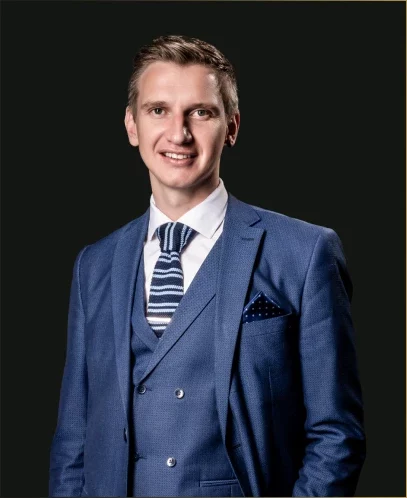
Ajay Wasserman,
Founder, author, host of Conscious Capital
12 minutes
28 July 2026
Listen to the podcast here
Audio Title: Patient Capital Is Not Passive Capital: What Long-Term Investors Must Actually Do
Description:Giving a business time is not the same as giving it unlimited tolerance. Learn why true patient capital combines long-term investment horizons with strict operational accountability and active governance.
Table of Contents
Introduction
Patient capital is often misunderstood. It is sometimes described as money that is willing to wait. Capital that accepts slower returns, overlooks temporary underperformance and gives a business more time to find its feet.
That definition is not entirely wrong. But it is incomplete. Because patient capital is not simply capital that waits. It is capital that works while it waits.
True patient capital combines a long-term investment horizon with active stewardship, operational support, disciplined governance and a clear understanding of how value will be created over time.
It does not pressure a viable business into delivering unrealistic short-term results. But neither does it tolerate poor execution indefinitely.
Patience without accountability is not patient capital. It is passive capital. And passive capital can be just as damaging to a business as impatient capital.
The Difference Between Time and Tolerance
Many businesses, particularly in emerging markets, require more time to mature than traditional investment models allow.
- A manufacturing facility may take years to reach efficient production levels.
- An agricultural business may need several planting cycles before its model is fully proven.
- A healthcare company may need time to build trust, secure regulatory approvals and develop distribution.
- An education platform may need to invest heavily in content, technology and teacher development before meaningful profitability appears.
These businesses are not necessarily weak. They may simply be operating in sectors where durable value takes time to build.
Patient capital recognises this. It gives management the space to make long-term decisions rather than constantly managing towards the next quarter, the next funding round or the next investor update. But giving a business time is not the same as giving it unlimited tolerance.
- There must still be milestones.
- There must still be evidence of progress.
- There must still be consequences when agreed actions are repeatedly ignored.
A patient investor may accept that profitability will take five years. That does not mean the investor should accept five years of poor financial controls, weak management, unresolved governance failures or repeated strategic drift.
The time horizon may be long. The accountability cycle should not be.

Patience with accountability: Building sustainable agricultural scale takes time.
Source: SunCulture
Patient Capital Begins With Better Underwriting
The work of patient capital begins before the investment is made. Long-term investors cannot compensate for weak investment judgement by simply promising to remain invested for longer.
Patience is not a substitute for underwriting. Investors still need to understand the market, the economics of the business, the integrity and capability of the founders, the competitive environment and the realistic path to sustainability. They must distinguish between a business that needs time and a business that has no viable model.
A good business may be early, undercapitalised or operationally immature. It may lack polished reporting, experienced executives or institutional systems.
These gaps can often be fixed. But a business with no meaningful customer demand, no economic advantage and no credible path to positive cash flow is not automatically transformed by a longer investment horizon.
Patient investors must therefore become better at identifying what is missing.
- Is the constraint capital?
- Is it technical expertise?
- Is it access to markets?
- Is it equipment?
- Is it governance?
- Is it leadership capacity?
- Or is the business fundamentally flawed?
This is where patient capital becomes a discipline rather than a slogan.
The investor must know which problems can be solved with time and support, and which problems will only become more expensive if ignored.
Capital Alone Is Rarely Enough
Many investors believe their responsibility ends once the funds have been transferred. The entrepreneur has the money. The investor has the shares. The board has been formed. The next update is scheduled. But in many growing businesses, particularly across Africa, the real work begins after the investment.
Capital may help the business buy equipment, hire employees or expand into a new market.
- It does not automatically build a finance function.
- It does not create a reliable procurement system.
- It does not improve management reporting.
- It does not negotiate better supplier terms.
- It does not recruit the right executives.
- It does not secure regulatory approvals.
- It does not introduce the company to new customers.
- It does not resolve tensions between founders.
These are often the areas where long-term investors can create the greatest value. Patient capital should therefore bring more than money. It should bring access to skills, networks, systems, strategic guidance and institutional capability.
This does not mean the investor should run the business on behalf of management. Founders and executives must remain responsible for execution. But an investor cannot claim to be a long-term partner while remaining detached from the practical realities that determine whether the business survives.
Active stewardship means helping the business become stronger without making it dependent on the investor.
- That requires judgement.
- Too little involvement can leave management isolated.
- Too much involvement can undermine leadership, confuse authority and turn the investor into an unofficial operating executive.
The goal is not control for its own sake. The goal is capability.

Active investors build the systems capital alone could not provide Goodlife Pharmacy
Source: LeapFrogInvestments
Governance Is Part of the Investment
In early-stage and growth businesses, governance is often treated as an administrative issue. It is not. Governance is one of the main tools through which patient investors protect the business from preventable failure.
A strong board should not exist merely to approve minutes and review historical numbers. It should help management identify risks, make difficult decisions, allocate resources and remain accountable to the long-term purpose of the company. Patient investors must take board participation seriously.
- They must arrive prepared.
- They must understand the business.
- They must ask difficult questions without humiliating management.
- They must challenge assumptions without creating paralysis.
- They must know when to support a founder and when to intervene.
A board seat is not an honorary title. It is a responsibility. In many cases, the quality of governance matters more than the amount of capital invested.
A business can recover from a difficult year. It is far harder to recover from years of unchecked mismanagement, hidden liabilities, poor culture or strategic confusion.
Patient capital must therefore be patient with the process of building value, but impatient with dishonesty, negligence and repeated avoidance of responsibility.
Long-Term Investors Still Need Discipline
There is a temptation in impact investing to become emotionally attached to the mission of a business. An enterprise may be creating jobs, serving a vulnerable community or solving an important social problem. These outcomes matter.
But a meaningful mission does not excuse weak financial discipline. If a business continually loses money without a credible route to sustainability, the impact will eventually disappear with the business.
Patient capital must therefore hold two truths at the same time.
- The business may deserve time.
- And the business must still become viable.
This requires clear performance indicators that extend beyond short-term profit. Investors may track customer retention, production efficiency, unit economics, management capability, job quality, environmental outcomes, revenue diversification and progress towards cash-flow sustainability.
The point is not to lower the standard. It is to use the right standard for the stage of the business.
A young manufacturing company should not be judged as though it were a mature listed corporation. But it should be expected to demonstrate improvement in production, quality control, sales conversion and working-capital management.
An early-stage healthcare company may not yet be profitable. But it should be building a credible patient base, proving its delivery model and strengthening compliance.
Long-term thinking does not remove the need for measurement. It makes measurement more important because the investor is committing to a longer journey.
Know When to Support and When to Stop
One of the hardest responsibilities of patient capital is knowing when patience has reached its limit.
- Not every business can be rescued.
- Not every management team can adapt.
- Not every founder is willing to accept support.
There are times when additional capital merely delays the inevitable. This is where patient investors must be honest with themselves. Are they continuing to support the business because the underlying opportunity remains strong? Or because they do not want to admit that the investment thesis has failed?
There is a difference between staying committed and becoming trapped. Additional capital should be linked to evidence.
- Have the agreed operational changes been implemented?
- Has management improved reporting?
- Have key appointments been made?
- Has the business responded to previous concerns?
- Is there measurable progress?
When every new funding request arrives with the same explanations and the same unresolved problems, patience can become avoidance. The responsible investor may need to restructure management, change the strategy, reduce exposure, seek a merger or close the business in an orderly manner.
This is not a betrayal of patient capital. It is part of its discipline. Long-term investors should be willing to endure temporary discomfort. They should not finance permanent dysfunction.

Sendy’s shutdown highlights why investor discipline must outweigh false patience.
Source: cioafrica
Patient Capital Must Be Structured for Reality
The structure of the investment should reflect the realities of the business. A company with seasonal cash flows should not be forced into rigid monthly repayments designed for a mature enterprise.
A capital-intensive business should not be funded entirely with short-term debt. A founder should not be diluted so aggressively in the first funding round that motivation and long-term alignment disappear.
Patient capital can use staged funding, revenue-linked instruments, convertible structures, preferred equity, flexible repayment terms or blended-finance mechanisms. Capital can be released against agreed milestones, allowing the investor to manage risk while the business proves its capacity.
This is not about making the terms unnecessarily complicated. It is about ensuring that the capital structure supports the business rather than quietly suffocating it. The most patient investor can still destroy a company by using the wrong instrument.
Building Institutions, Not Dependency
The ultimate goal of patient capital should be to help businesses become investable, bankable and institutionally strong. The investor should not remain the permanent solution to every problem. Over time, the company should develop its own management depth, financial systems, governance structures and access to commercial finance.
A successful patient-capital investment should eventually require less intervention, not more. The business should become capable of attracting lenders, larger institutional investors or strategic partners on better terms.
This is particularly important in Africa, where many viable enterprises remain trapped between informal finance and institutional capital. They are too large for microfinance, too early for banks and too operationally complex for conventional venture capital.
Patient capital can help these businesses cross that gap. But only when it is willing to do the work. Not merely to wait for the business to become perfect, but to participate in the process of making it stronger.
Capital With Commitment
Patient capital is often celebrated for its willingness to accept a longer return period. That matters. But the real value of patient capital lies in what happens during that period.
- It asks better questions.
- It structures capital more intelligently.
- It strengthens governance.
- It supports management.
- It opens networks.
- It builds systems.
- It tracks progress.
- It intervenes when necessary.
And it remains clear about the difference between a difficult journey and a failing destination. The future of impact investing will not be built by investors who simply wait longer than everyone else. It will be built by investors who stay engaged longer, think more deeply and take responsibility for the institutions they help create.
Patient capital is not passive capital. It is active stewardship, exercised over a disciplined period of time, in service of building businesses that can endure long after the investor’s involvement has ended.