
conscious capital
Energy Access as Enterprise Infrastructure: Powering the Businesses Behind Growth

Ajay Wasserman,
Founder, author, host of Conscious Capital
6 minutes
27 October 2026
Listen to the podcast here
Audio Title: Energy Access as Enterprise Infrastructure: Powering the Businesses Behind Growth
Description:How investors can finance reliable energy that strengthens African enterprises, with practical tests for demand, affordability, maintenance and impact.
Table of Contents
Introduction
Consider a food trader whose cold room loses power during the hottest part of the day. The immediate problem is spoiled stock. The next problem is cash: tomorrow’s purchases must be funded from a smaller balance. Suppliers become cautious, orders shrink and employing another person becomes harder to justify. A fault in the electricity supply has become a constraint on an entire small business.
This is the perspective I would bring to energy investment in Africa. We should ask what a reliable service enables an enterprise to produce, preserve and sell, and whether that additional value can support the cost of supplying it.
Measure the service a business can actually use
The scale of the access challenge remains substantial. The 2025 Tracking SDG 7 report estimated that 565 million people in sub-Saharan Africa lacked electricity in 2023, representing 85% of the global population without access. Those are dated access estimates, rather than a count of businesses able to obtain dependable power today.
The 2026 edition provides a newer picture: 655 million people worldwide lacked electricity in 2024, while the rural access deficit in sub-Saharan Africa reached 447 million. The rural figure is a subset of the regional deficit and should not be compared directly with the earlier total. Both reports measure access; neither establishes whether a particular enterprise receives dependable power during its working day.
For a business, the relevant questions go further. Can the supply run its machinery? Is voltage stable? Does power arrive during trading hours? How quickly will a technician respond? Can the business afford the bill through its quieter months?
ESMAP’s review of the Multi-Tier Framework makes this distinction explicit: energy access should be assessed through service attributes including capacity, reliability, affordability and safety, rather than connectivity alone.
An investor should carry that discipline into the model. A system that cannot meet the customer’s operating requirements has weak foundations for both its revenue forecast and its impact claim.

Commercial solar array installation in Bujumbura, Burundi provides stable business power.
Source: ESMAP
Start with the activity that earns the income
Before choosing the equipment, understand the local enterprise. A grain mill, welding workshop, refrigerated distributor and internet-enabled service business have different operating cycles. Their needs should shape generation, storage, distribution and maintenance decisions.
Ask customers to explain their bottleneck and show how it affects trading. Review actual production, discarded stock, fuel purchases and interruptions where records exist. Where records are weak, a measured pilot can reveal more than a confident forecast based on population and installed capacity.
Electricity is sometimes only one constraint. A processor may still need a machine, working capital, transport or a buyer. Funding the connection without those complementary conditions can leave an attractive asset underused. The World Bank and ESMAP’s off-grid solar market research identifies appliance affordability as a barrier and discusses service models, rent-to-own arrangements and seasonal pricing as possible responses.
This calls for coordination, rather than loading every risk onto the energy provider. Equipment finance, business support and distribution partnerships should have clear responsibilities and realistic repayment assumptions. Demand should be demonstrated before debt assumes it has arrived.
Translate productive value into a bankable payment
There are two financial models to test: the operator’s model and the customer’s. They must work together.
In a hypothetical cold-storage project, a service may reduce spoilage and help a trader sell more valuable produce. The customer’s potential benefit should be calculated after additional stock, transport, labour and finance costs. Revenue growth alone does not establish affordability. If the service fee consumes nearly all the additional operating cash, a small disruption may turn an apparently strong customer into an overdue account.
The operator, meanwhile, needs enough collected revenue to maintain equipment, replace components and service capital. A tariff can be cheap at installation and expensive over the life of a system if maintenance was omitted from the offer. The useful comparison is the total cost and reliability of the available alternatives, including existing grid supply and backup arrangements.
Investors should stress-test lower utilisation, delayed customer growth, collection losses and equipment downtime together. A project that depends on every optimistic assumption occurring at once deserves a smaller pilot, a different capital structure or a different price.

Koolboks freezer in Lagos, Nigeria balances trader affordability and operator maintenance. Source: Untapped Global
Finance the whole operating life
Equipment can be bought once; dependable service has to be delivered repeatedly. Spare parts, technician coverage, monitoring, customer support and replacement reserves belong in the original investment case.
Local maintenance capacity deserves particular attention. Who identifies a fault, who holds the part and who has permission to make the repair? The answer should remain workable after the installation team leaves. A supplier warranty offers limited comfort if resolving a claim leaves customers without service for weeks.
The financing should also reflect the currency and timing of the cash flows. Where equipment is imported and customers pay in local currency, investors must identify who carries depreciation risk and what happens to affordability when exchange rates move. Simply transferring every movement into the customer’s bill can undermine the demand on which the project depends.
Public or concessional support may be justified for demonstrable access barriers, early demand development or infrastructure with wider benefits. Its role should be visible and measurable. Underwriting should show which costs it covers, why that support is necessary and how continuing operations will be sustained when the initial funding ends.
Hold the investment accountable for useful service
An energy portfolio needs operating measures as well as connection counts. Track reliable service during business hours, active commercial customers, collected revenue, repair times and reserves for replacement. For the impact case, examine changes in customer costs, productive activity and the quality of employment where evidence can reasonably be gathered.
Care is needed with attribution. A business may expand because it found a better market or hired an effective manager as well as gaining reliable electricity. Baseline information, customer interviews and honest reporting can identify the energy investment’s contribution without claiming every improvement as its own.
The same evidence should influence capital allocation. Strong utilisation and customer cash generation may support expansion. Weak demand should prompt investigation before additional equipment is financed. Repeated failures should affect the operator’s incentives and the board’s decisions.
Africa needs capital that treats electricity as an operating commitment to the people who depend on it. The strongest investment case will connect reliable service, viable customer businesses and sufficient cash to maintain the system. That is how a power asset can become productive infrastructure with a durable place in the local economy.
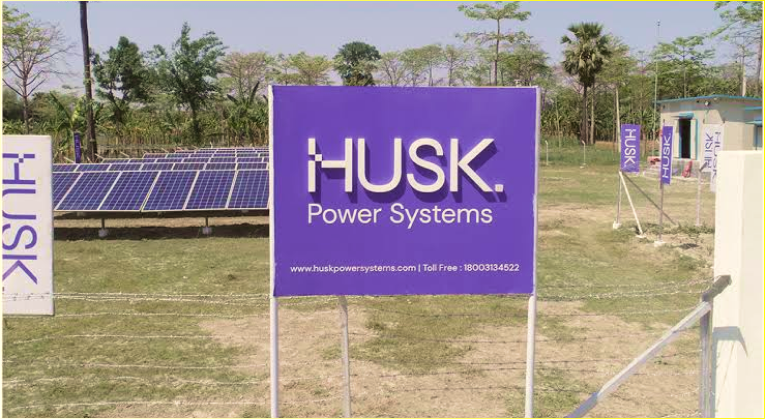
Husk mini-grid in Nigeria driving rural commercial expansion through reliable electricity.
Source: Empower Africa
Test the customer's cash benefit
In a simplified illustration, a trader avoids R6,000 of spoilage each month and spends R3,000 less on backup fuel. The new cold-storage service costs R5,000 a month, with another R1,000 for handling and transport. The remaining benefit is R3,000 before tax and any additional financing costs. These are invented figures to demonstrate the calculation, not a forecast.
If avoided spoilage is only R3,000, the benefit falls to zero. That tells the investor which assumption needs field evidence before funding. It also gives the operator a useful pilot: measure stock losses, fuel spending, service fees and extra operating costs for comparable trading periods. The customer must retain a meaningful benefit after paying for the service.