
conscious capital
The Revolution Won’t Be Donated — It Will Be Funded

Ajay Wasserman,
Founder, author, host of Conscious Capital
9 minutes
27 June 2025
Listen to the podcast here
Audio Title: The Revolution Won’t Be Donated. It Will Be Funded
Description:Why Investing in Job Creation and Education Is the Only Path to Sustainable Growth in Emerging Markets. What if the greatest lever for transforming economies isn’t more aid, political promises, or international resolutions?What if it’s capital?Not speculative capital. Not extractive capital.But strategic, long-term investment into businesses that create jobs and build skills.This is not just a moral imperative. It’s an economic strategy. If we want to build emerging markets that can sustain themselves—without foreign crutches—we must fund the builders, not the bystanders.
Table of Contents
Introduction
What if the greatest lever for transforming economies isn’t more aid, political promises, or international resolutions?
What if it’s capital?
Not speculative capital. Not extractive capital.
But strategic, long-term investment into businesses that create jobs and build skills.
This is not just a moral imperative. It’s an economic strategy. If we want to build emerging markets that can sustain themselves—without foreign crutches—we must fund the builders, not the bystanders.
Aid Addresses Symptoms. Capital Fixes Systems.
For decades, emerging economies have been supported through development programmes, humanitarian relief, and donor funding. While necessary in moments of crisis, this model has fundamental limitations:
- It is external rather than embedded
- It is temporary rather than generational
- It often treats poverty, but does not enable prosperity
Real change happens when capital is deployed to enable people to solve their own problems. That’s what businesses—especially small and medium-sized enterprises—do best.
They hire. They train. They innovate. And when they succeed, they don’t just generate profit. They generate resilience.
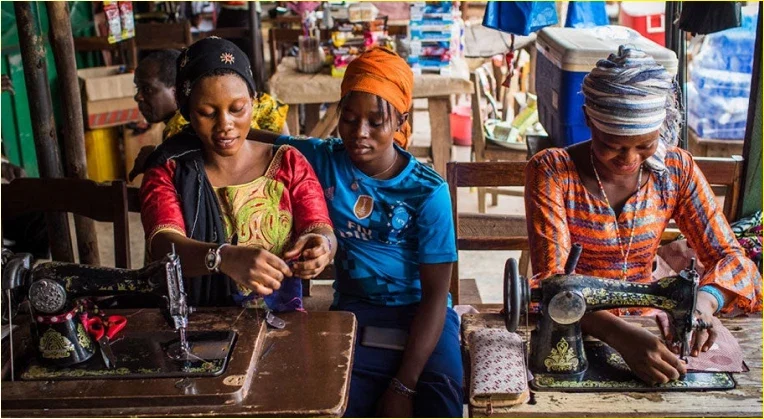
Supporting South Africa’s-Urban informal sector coordinated policies social-protection
Why Jobs and Education Are Non-Negotiable
Every healthy economy is built on two foundations:
- People who are productively employed
- People who are continuously learning and upskilling
Job creation fuels income, purchasing power, tax revenue, and social stability. Education drives productivity, adaptability, and innovation. Together, they build what economists call human capital—the engine of long-term competitiveness. Without jobs, people fall into poverty. Without education, they become trapped there. In most emerging markets, these are the two areas where the deficit is greatest—and where capital has the most impact.
How Capital Builds Ecosystems That Sustain Themselves
Strategically allocated capital can do far more than generate financial returns. It can buildeconomic systems that function independently, grow organically, and scale sustainably.
Let’s explore how this works—step by step.
1. Capital Empowers Entrepreneurs to Build Locally Relevant Solutions
In emerging markets, local entrepreneurs are often best placed to identify problems and design relevant, culturally appropriate solutions.
What they often lack is access to growth capital.
When we fund them, they don’t just build businesses—they build infrastructure. They employ youth. They train workers. They provide services where governments or global corporates can’t.
A logistics start-up in Southeast Asia, a healthcare franchise in Latin America, or a vocational tech platform in Eastern Europe—these are not side projects. They are the scaffolding of a modern economy. And they all start with one thing: access to the right kind of capital.
2. Job Creation Stimulates Local Economic Circulation
Every job creates a ripple effect. An employed person earns and spends. That spending supports other businesses, who then hire more people. It’s a multiplier. This is how local economies grow—from the inside out. Unlike donor funds, which often flow in and out with little long-term impact, capital invested in productive enterprises tends to stay in circulation, creating a sustainable feedback loop. It is local money, spent locally, by local people, on local goods and services.
That’s what economic inclusion really looks like.
3. Teaching Businesses Build Long-Term Competitiveness
Education—especially practical, skills-based education—is a long-term investment in the economy’s productivity. Businesses that teach—whether through edtech platforms, vocational academies, or apprenticeship programmes—are building the future workforce.
When properly capitalised, these businesses scale fast, improve quality, and expand access to those previously excluded. A coding bootcamp in Pakistan, a welding school in Kenya, or a digital upskilling platform in Brazil—these aren’t isolated success stories. They’re blueprints for economic transformation. The more we fund them, the faster we build the talent infrastructure required for sustainable growth.
4. Local Capacity Means Less Dependency
Emerging markets often rely on imports for basic goods and services. This makes them vulnerable to currency shocks, supply chain disruptions, and external policy decisions.
But what if more of what is consumed could be produced locally? Investing in local agro-processing, clean energy, healthtech, and manufacturing enables markets to meet their own needs—reducing import dependency and increasing trade potential. This shift isn’t just about economics. It’s about sovereignty and resilience. The more local the solution, the stronger the ecosystem.
5. One Investment Crowds in Many Others
Early capital de-risks markets. It validates models. And it attracts others.
Development finance institutions, corporate venture arms, and institutional investors often wait for evidence before deploying large-scale capital. Your investment can be the catalyst.
That’s the beauty of ecosystem investing: you don’t just fund one business—you spark a movement.
6. A Cultural Shift from Job Seeking to Job Creating
Too often, the education systems in emerging markets produce graduates who wait for jobs that don’t exist. By investing in businesses that promote entrepreneurship and practical training, we help rewrite the narrative:
“I need a job” becomes
“I can create jobs.”
This shift in mindset—from dependency to agency—is where true transformation begins. It’s not just economic. It’s generational.
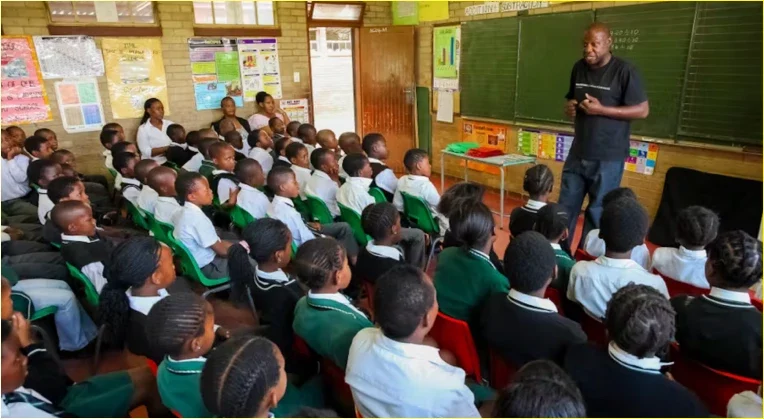
Government has delivered on school infrastructure programmes, though there are some persistent problems 100 schools still to be built, 9000 schools still using pit latrines, 300 schools without electricity – which must be corrected.
Source: The conversation
What Does a Self-Sustaining Economy Look Like?
Here’s what happens when you invest with purpose in an emerging market:
Local entrepreneurs scale businesses solving real needs.
- Those businesses hire and train from within their communities
- Jobholders spend, supporting other local enterprises
- Education providers upskill the population, feeding back into the economy
- More investors take notice, increasing funding
- The ecosystem becomes self-reinforcing—and self-sustaining
This is how economic transformation happens. Not through trickle-down development, but through bottom-up capital allocation.
Why Emerging Markets—and Especially Africa—Are the Opportunity of the Century
Emerging markets already represent over 60% of global GDP growth. They are urbanising, digitising, and demographically expanding faster than any other regions. Within this broader picture, Africa stands out. With a population projected to reach 2.5 billion by 2050 and the world’s youngest labour force, Africa is not just an emerging market—it is the largest emerging opportunity. Yet less than 5% of global venture capital reaches the continent. Less than 3% of institutional portfolios are allocated to Africa-focused assets. This is a gap. But more importantly, it is an invitation. Investors who act now won’t just see outsized returns. They’ll play a defining role in shaping the next global growth story.
The Call to Action: Fund the Builders
If you’re an investor, policymaker, philanthropist, or institutional allocator, the message is simple:
Stop waiting for perfect markets. Start funding imperfect, passionate, problem-solving entrepreneurs in emerging economies.
Look for businesses that:
- Employ at scale
- Teach and train people
- Build local supply chains
- Innovate around infrastructure gaps
- Reinvest in their communities
This is not charity. It’s not CSR.
It’s high-impact, long-horizon investing with systemic returns.
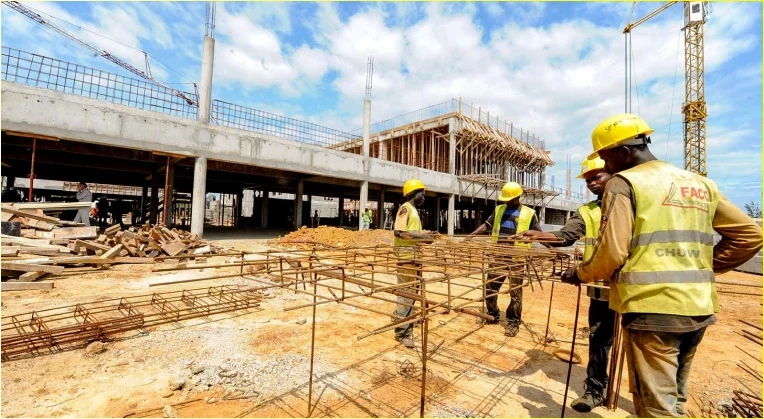
South Africa is actively working on an infrastructure building program to boost economic growth and address inequality. The program focuses on projects in energy, water, transport, digital infrastructure and agriculture
Final Reflection: It Starts with Capital—But Ends with People
Ultimately, every economic breakthrough, every thriving city, and every prosperous society starts with the same ingredients: jobs and knowledge. Investing in businesses that provide both is how we build economies that last. That stand. That grow. That include.
The revolution won’t be donated.
It will be funded.
And it starts now.
Let’s Talk
If you’re building or funding in this space—reach out.
We’re not just watching the next chapter of emerging markets unfold.
Attracting Impact Investments
The world is changing fast, and with it, the pace of entrepreneurship is accelerating—especially in emerging markets like Africa. Entrepreneurs are now at the forefront of solving some of the most pressing challenges of our time, from healthcare access to clean energy, food security to education. Africa, in particular, is experiencing a surge in entrepreneurial activity, creating a wave of opportunities to drive financial inclusivity and impact at a scale never seen before.
This is the perfect moment for a new approach—conscious capital.
Conscious capital is about more than just making money. It’s about aligning financial success with the well-being of people and the planet. It’s about investing with purpose, focusing on long-term sustainability, and creating businesses that are grounded in values of empathy, equity, and social responsibility.