
conscious capital
From Soil to Sustenance: Agriculture as a Global Engine for Job Creation in Emerging Markets

Ajay Wasserman,
Founder, author, host of Conscious Capital
9 minutes
4 July 2025
Listen to the podcast here
Audio Title: From Soil to Sustenance: Agriculture as a Global Engine for Job Creation in Emerging Markets
Description:As the world continues to face converging crises—economic inequality, climate disruption, youth unemployment, and food insecurity—there is one sector that offers a rare and powerful convergence of solutions: agriculture. Yet despite its undeniable relevance, agriculture remains vastly under leveraged, especially in emerging markets. While technology, financial services, and infrastructure dominate investment headlines, it is the soil beneath our feet—and the systems that sustain it—that may hold the most transformative potential for both job creation and global sustainability. In particular, Africa, endowed with more than 60% of the world’s remaining uncultivated arable land, stands poised not only to feed its own rapidly growing population but also to become the food basket of the world. And in doing so, it could drive the creation of tens of millions of new, meaningful jobs, while uplifting communities and regenerating economies. This is the promise of agriculture. And this is where the philosophy of conscious capital must focus its attention.
Table of Contents
Introduction
As the world continues to face converging crises—economic inequality, climate disruption, youth unemployment, and food insecurity—there is one sector that offers a rare and powerful convergence of solutions: agriculture.
Yet despite its undeniable relevance, agriculture remains vastly under leveraged, especially in emerging markets. While technology, financial services, and infrastructure dominate investment headlines, it is the soil beneath our feet—and the systems that sustain it—that may hold the most transformative potential for both job creation and global sustainability.
In particular, Africa, endowed with more than 60% of the world’s remaining uncultivated arable land, stands poised not only to feed its own rapidly growing population but also to become the food basket of the world. And in doing so, it could drive the creation of tens of millions of new, meaningful jobs, while uplifting communities and regenerating economies. This is the promise of agriculture. And this is where the philosophy of conscious capital must focus its attention.
Agriculture: The World’s Largest Employer
Globally, agriculture already employs over 1 billion people, accounting for 27% of global employment, according to the International Labour Organisation (ILO). In Sub-Saharan Africa and parts of Asia, that figure is even higher, with agriculture contributing over 50% of employment in many countries.
But these jobs are too often informal, precarious, and disconnected from larger value chains. In too many places, agriculture remains trapped in subsistence cycles, with low productivity, minimal mechanisation, and limited value addition.
Yet with the right investment, infrastructure, and innovation, agriculture has the potential to transform into a high-growth, high-employment sector capable of absorbing millions of new entrants to the labour market—particularly young people and women.
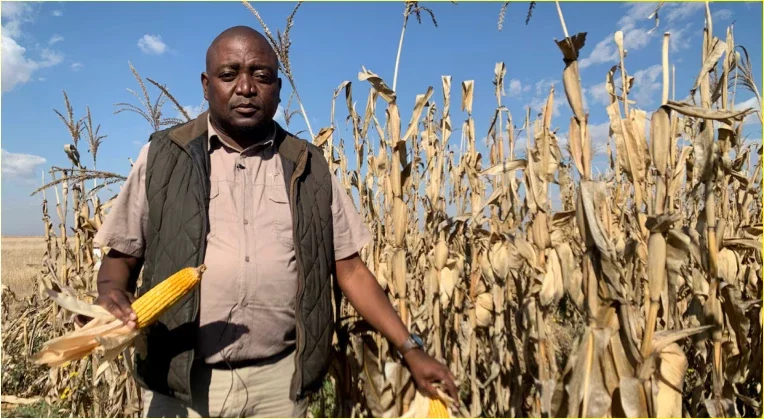
Insight: South African farmers dream of drought cover on climate front line Source: Reuters
Why Agriculture? The Multiplier Effect on Jobs
Unlike many sectors, agriculture doesn’t create jobs in isolation. Its employment effect spans entire value chains, reaching from seed to shelf. This includes:
- Input suppliers (e.g. fertilisers, seeds, tools, irrigation)
- Primary producers (farmers and farm workers)
- Agro-processors (turning raw goods into finished products)
- Storage and logistics providers
- Retailers and exporters
- Agri-tech and digital solution providers
- Advisors, educators, and extension officers
For every job on the farm, several more can be created off the farm—especially when smallholder production is connected to formal markets, value-added processing, and domestic and international trade.
This makes agriculture uniquely positioned to create inclusive, distributed employment across both rural and peri-urban areas.
Africa: The Untapped Food Basket of the World
Africa’s agricultural promise is unmatched:
- 60% of the world’s uncultivated arable land
- Diverse climatic and agro-ecological zone
- A fast-growing population, expected to double to 2.5 billion by 2050
- Rising urban food demand
- Abundant natural resources and a strong agrarian tradition
But the real opportunity lies in transforming agriculture from a subsistence activity into a modern, technology-enabled, market-linked system. Doing so would unlock massive economic value and create a wide array of jobs across the continent—from smallholder farmers to agricultural engineers, logistics providers, data analysts, food processors, and beyond.
1. Lack of Access to Finance
Most smallholders operate without insurance, credit, or access to working capital. Risk-averse banking systems and underdeveloped rural financial markets have left a massive gap.
2. Underdeveloped Infrastructure
Poor roads, unreliable electricity, and limited storage or irrigation capacity reduce productivity and increase post-harvest losses—up to 30–40% in some regions.
3. Fragmented Markets
Without formal buyer linkages or cooperatives, many producers are forced to sell to informal intermediaries at lower prices.
4. Perception and Skills Gap
Young people often see agriculture as outdated or unprofitable. There is a lack of training, entrepreneurship support, and pathways to modern agribusiness.
5. Climate Vulnerability
Erratic rainfall, land degradation, and desertification present long-term threats unless sustainable, regenerative practices are adopted.

Special Report: African Farming & the World
Source: Financial Times
Reimagining Agriculture as a 21st Century Industry
To truly transform agriculture into a future-fit, job-generating engine, we must reimagine it as a modern, integrated, and innovation-led sector. This includes:
- Digitising agriculture through mobile platforms, AI-driven crop management, satellite mapping, and digital marketplaces
- Building agro-processing and storage infrastructure to reduce waste and increase value retention
- Training a new generation of agri-preneurs with business, financial, and technical skills
- Improving access to markets, both regional and global, by aggregating production and standardising quality
- Investing in climate-smart and regenerative farming, including water-efficient irrigation, composting, cover cropping, and carbon-sequestering practices
This reimagination is not only urgent—it’s achievable. And it must be anchored in values, not just capital.
The Role of Conscious Capital
Conscious capital goes beyond investment for financial return. It is capital that seeks to generate lasting, inclusive, and regenerative impact—social, environmental, and economic.
In agriculture, this could mean:
- Investing in community-based cooperatives that empower smallholders
- Funding value chain integration to ensure fairer pricing and shared value
- Supporting women-led agribusinesses and youth agri-startups
- Backing climate-smart infrastructure and low-tech irrigation solutions
- Providing patient capital, technical assistance, and blended finance to de-risk early-stage innovations
Unlike extractive capital models that prioritise short-term exit strategies, conscious capital understands that agriculture requires time, trust, and systems thinking. It requires investing not just in profits—but in people, soil health, water cycles, and food sovereignty.
Case Studies: Where Agriculture is Working for Jobs
Several countries and communities are already proving what’s possible:
Rwanda – The Coffee Renaissance
By investing in cooperatives, quality control, and brand identity, Rwanda has transformed its coffee sector. Today, it employs over 400,000 farmers and has positioned its beans among the most premium in the world.
KENYA – The Rise of AgriTech
Platforms like Twiga Foods and DigiFarm are connecting farmers to markets, improving transparency, and reducing waste. These innovations are also creating new tech and logistics jobs.
Nigeria – Cassava Value Chains
Investments in cassava processing have turned a previously low-value crop into a foundation for food, flour, and ethanol production—providing employment across rural states.
Morocco – Greenhouses and Water Innovation
Through public-private investment in greenhouses and drip irrigation, Morocco has increased yields and export capacity while reducing water use—creating jobs in farming, packaging, and logistics.
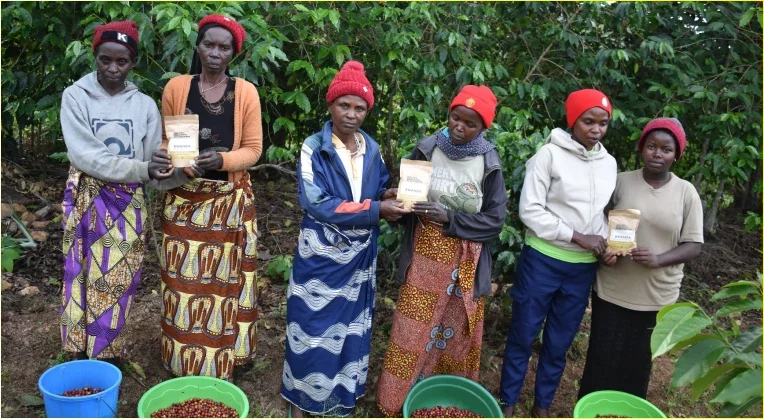
Rwanda Sholi Coffee: A Naturally Processed Bourbon Supporting Women in Coffee
Source: OZO Coffee Roasters
The Time is Now
The next 25 years will define the trajectory of the global economy. Africa, home to the youngest population and the most arable land, is at the centre of this shift.
If agriculture is scaled intentionally and sustainably, the continent can feed not only itself but also growing populations in Asia, the Middle East, and Europe—especially as climate change disrupts traditional breadbaskets.
This is not charity. This is strategy.
Food is the new oil. And soil is the new gold.
But the question is: will we invest in this potential before it’s too late?
Conclusion: From Harvest to Hope
Agriculture is more than an industry—it is a system of life. It sustains economies, nourishes communities, and ties us to the land in ways no other sector can.
In emerging markets—especially Africa—agriculture holds the power to address multiple crises simultaneously: youth unemployment, rural poverty, food insecurity, and climate degradation.
But doing so requires more than money. It requires conscious capital—capital that is values-aligned, impact-driven, and patient enough to work in cycles of planting, nurturing, and harvesting.
As the world searches for resilient, inclusive pathways to growth, the answer may not lie in Silicon Valley or Wall Street. It may lie in a cassava field in Nigeria, a maize plot in Tanzania, or a tomato greenhouse in Morocco.
Let us look again at the land.
Let us invest not only in yields—but in youth.
Let us cultivate not only crops—but community.
And let us harvest not only profits—but a shared future rooted in dignity, opportunity, and sustainability.
Attracting Impact Investments
The world is changing fast, and with it, the pace of entrepreneurship is accelerating—especially in emerging markets like Africa. Entrepreneurs are now at the forefront of solving some of the most pressing challenges of our time, from healthcare access to clean energy, food security to education. Africa, in particular, is experiencing a surge in entrepreneurial activity, creating a wave of opportunities to drive financial inclusivity and impact at a scale never seen before.
This is the perfect moment for a new approach—conscious capital.
Conscious capital is about more than just making money. It’s about aligning financial success with the well-being of people and the planet. It’s about investing with purpose, focusing on long-term sustainability, and creating businesses that are grounded in values of empathy, equity, and social responsibility.