
conscious capital
Beyond Bankability: How Investors Can Finance Good Businesses Before They Look Perfect
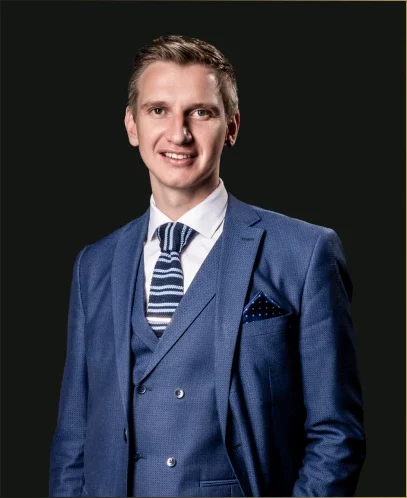
Ajay Wasserman,
Founder, author, host of Conscious Capital
12 minutes
21 July 2026
Listen to the podcast here
Audio Title: Beyond Bankability: How Investors Can Finance Good Businesses Before They Look Perfect
Description:Businesses are told they need capital to grow, formalise, improve their systems, hire experienced people and become more resilient.
Table of Contents
Introduction
There is a dangerous contradiction at the heart of African enterprise finance.
Businesses are told they need capital to grow, formalise, improve their systems, hire experienced people and become more resilient.
Yet when they approach investors or lenders for that capital, they are told they must first demonstrate that they have already grown, formalised, improved their systems, hired experienced people and become more resilient.
In other words, they must become bankable before receiving the capital required to become bankable.
This is one of the reasons so many promising African businesses remain trapped in the uncomfortable space between survival and scale. They are too established for microfinance, too capital-intensive for bootstrapping and not yet polished enough for conventional bank lending or institutional private equity.
They may have real customers, capable founders, viable products and growing demand. But their financial statements are incomplete. Their governance is still developing. Their assets may not qualify as traditional collateral. Their management accounts may arrive late. Their revenues may be seasonal or concentrated among a few customers.
None of these weaknesses should be ignored.
But neither should they automatically disqualify a fundamentally good business from receiving capital.
The real question is not whether the enterprise looks perfect today.
The real question is whether the underlying business is viable, whether its weaknesses can be corrected and whether capital can be structured in a way that protects the investor while giving the company room to grow.
That requires investors to move beyond a narrow definition of bankability.

Success Story: Smart asset financing helps OX Delivers bypass rigid bank lending requirements.
Source: Untapped Global / OX Delivers
Bankability Is Often the Result, Not the Starting Point
Conventional lenders are designed to protect deposits and preserve capital. They generally prefer businesses with predictable cash flows, established financial records, sufficient collateral, low customer concentration and proven repayment capacity.
That discipline is understandable.
The problem arises when the same underwriting approach is applied to businesses operating in markets where informality, infrastructure gaps, volatile currencies and limited access to long-term capital are part of the environment.
Many viable African enterprises do not initially fit the traditional lending template.
- A manufacturer may have strong demand but need new equipment before it can fulfil larger orders.
- An agricultural processor may have reliable customers but face seasonal working-capital pressure because farmers must be paid months before finished goods are sold.
- A healthcare company may have a sound model but need funding to open additional clinics before it can spread its central costs across a larger network.
- A logistics business may have contracts but lack the fleet capacity required to service them.
These businesses are not necessarily unbankable because their models are weak. They may be unbankable because they have not yet been financed through the stage where their operations become sufficiently stable for conventional lenders.
Bankability, in many cases, is an outcome produced by the right kind of capital.
The role of a thoughtful investor is therefore not merely to identify businesses that already meet every institutional standard. It is to recognise enterprises that can reach those standards with appropriately structured support.
The Cost of Waiting for Perfection
Investors often say they want to support small and medium-sized enterprises, job creation and inclusive growth.
But in practice, capital frequently arrives only after the riskiest and most difficult stage has already been navigated by the founder.
By then, the business has proven its market, strengthened its systems, attracted key staff and achieved predictable cash flows. The investment becomes easier to justify, but much of the developmental work has already been done.
This creates a market in which too much capital competes for a small number of highly polished businesses, while thousands of viable enterprises remain underfunded.
The irony is that waiting for perfection does not always reduce risk.
A business denied growth capital may lose a major contract, fail to maintain equipment, delay payments to suppliers or take on expensive short-term debt. A temporary funding gap can quickly become an operational crisis.
The investor who rejected the business because it appeared slightly too risky may later discover that the lack of financing created the very risk they were trying to avoid.
Capital is not neutral.
When it arrives at the right time, it can strengthen a business. When it arrives too late, it may merely refinance distress.
The opportunity is to finance enterprises before their imperfections become failures.

Institutional hesitation for absolute financial predictability triggered WhereIsMyTransport’s operational shutdown.
Source: 2025 State of Tech in Africa Report / BusinessDay SA corporate tracking.
Start by Separating Fixable Weaknesses From Fatal Flaws
Investing before a company looks perfect does not mean lowering standards or ignoring risk.
It means becoming more precise about the type of risk being assessed.
Some weaknesses are fundamental. A business with no genuine customer demand, consistently negative unit economics, dishonest management or an unsustainable operating model should not receive capital simply because its mission sounds compelling.
- Other weaknesses are correctable.
- Poor financial reporting can be improved.
- Weak inventory controls can be fixed.
- An overdependence on the founder can be reduced through management appointments and clearer delegation.
- Customer concentration can be addressed through a deliberate sales strategy.
- Informal governance can be strengthened through board oversight and reserved decision-making rights.
The investor’s job is to distinguish between a business that is structurally broken and one that is operationally immature.
A structurally broken business consumes capital without solving its underlying problems.
An operationally immature business can become stronger when capital is combined with discipline, capability and time.
This distinction is the foundation of better underwriting.
Staged Capital Reduces Risk Without Starving the Business
One of the most effective ways to support an imperfect but viable enterprise is to release capital in stages.
Instead of providing the entire funding amount upfront, the investor links each tranche to clearly defined operational milestones.
The initial capital might fund urgent working capital, the installation of basic financial systems or the fulfilment of a confirmed customer order.
A second tranche may be released once management accounts are being produced on time, key hires have been made or a new production line has reached an agreed level of output.
Further capital may follow when revenue, gross margins, customer diversification or governance improvements meet predetermined thresholds.
This approach protects both sides.
The business does not have to meet every institutional requirement before receiving its first funding. It only needs to demonstrate sufficient viability and the capacity to reach the next milestone.
The investor, meanwhile, does not have to assume the full risk on day one. Each funding decision is informed by fresh evidence of execution.
Staged capital also creates a healthier relationship between the investor and entrepreneur. Instead of conducting due diligence once and then hoping the business performs, both parties agree on a sequence of measurable steps.
Capital becomes part of a disciplined growth process rather than a single transaction.
The milestones must, however, be carefully designed.
They should focus on outcomes the business can realistically control. They should not force management to chase short-term revenue at the expense of long-term resilience. They should also be clear enough to prevent future disputes over whether the conditions have been met.
The purpose of staging capital is not to keep the entrepreneur permanently dependent on investor approval. It is to build confidence progressively until the business is strong enough to access larger and more conventional pools of finance.
Technical Support Is Part of the Investment
Many investors assume that once capital has been deployed, the primary responsibility shifts to management.
But money alone does not repair weak systems.
A business may receive funding and still struggle because its pricing is wrong, its reporting is poor, its operational processes are undocumented or its founder is overwhelmed by decisions that should be handled by a capable management team.
In these cases, the difference between a successful investment and a failed one may be technical support.
This does not mean investors should take over the company. Founders must retain the space and authority to lead.
It means recognising that capability gaps are often as important as capital gaps.
An investor can help a business appoint a finance manager, introduce a credible accounting firm, improve procurement controls, strengthen legal contracts or develop a more disciplined budgeting process.
Support may include assistance with governance, strategy, human resources, technology adoption, market access or environmental and social standards.
In some situations, the business needs a chief financial officer for two days a week rather than a full-time executive it cannot yet afford. In others, it may need an experienced operating partner to help redesign production or reduce waste.
The cost of this support should be built into the investment structure from the beginning.
Too often, technical assistance is treated as an optional add-on or a charitable gesture. In reality, it is a form of risk management.
A company with stronger information, better controls and clearer accountability is more likely to grow sustainably and repay its financiers.
The strongest investors do not simply ask, “What is wrong with this business?” They ask, “Which of these weaknesses can we help the business correct?”

Success Story: Technical assistance enabled Good Nature Agro to build resilient supply chain controls.
Source: Goodwell Investments Portfolio | FINCA Ventures Case Study
Better Underwriting Looks Forward as Well as Backward
Traditional underwriting relies heavily on historical evidence.
- How much revenue did the company generate?
- What assets does it own?
- What were its profits over the previous three years?
- How much collateral can the lender recover if the business fails?
These questions remain important, but they do not tell the entire story.
A business operating in a fast-growing market may have a short financial history but a strong order book. A company with limited physical assets may have valuable customer relationships, intellectual property or recurring contracts. An agricultural business may appear volatile when assessed monthly, but stable when its full production cycle is understood.
Better underwriting looks beyond the balance sheet.
- It examines the quality of customer demand, the reliability of cash conversion, the economics of each product, the founder’s integrity, the operational bottlenecks and the specific use of the proposed funding.
- It asks whether the capital itself will improve the company’s risk profile.
For example, funding equipment that reduces production costs may strengthen margins and repayment capacity. Financing inventory against confirmed orders may be less risky than an unsecured loan based only on historical profits. Providing capital to diversify a concentrated customer base may reduce long-term vulnerability.
Investors should also use information that conventional models sometimes overlook.
- Bank transaction data can reveal the actual movement of cash through a business.
- Supplier records can indicate payment discipline.
- Purchase orders and invoices can demonstrate customer demand.
- Production data can show whether operational capacity is being used efficiently.
- Tax records, mobile payments, digital sales platforms and sector-specific operational information can provide a more complete view of performance.
The objective is not to find creative reasons to approve every investment.
It is to build an underwriting process that reflects how the business truly operates.
Structure Capital Around the Business, Not the Other Way Around
Many viable businesses are weakened by receiving the wrong type of capital.
- A company with irregular cash flows may be given a loan requiring fixed monthly repayments.
- An early-stage business may accept expensive short-term debt because equity investors consider it too small.
- A founder may surrender an excessive shareholding to finance a temporary working-capital need.
- A seasonal agricultural enterprise may be required to service debt during months when it generates little income.
These structures can turn a good business into a distressed one.
Patient underwriting must therefore be matched by patient structuring.
Repayment periods can be aligned with the company’s cash-generation cycle. Grace periods can allow productive assets to be installed before repayments begin. Revenue-based financing can adjust payments according to actual performance. Preferred equity or redeemable instruments can provide flexibility where traditional debt is too rigid and ordinary equity is unnecessarily dilutive.
Receivables finance can help businesses bridge the gap between delivering work and being paid by large customers. Equipment finance can fund productive assets without placing the entire burden on working capital. Purchase-order finance can support the fulfilment of credible contracts.
Blended finance can also be valuable where an enterprise produces significant social or environmental benefits but cannot yet provide fully commercial risk-adjusted returns. Guarantees, first-loss capital, concessional funding and technical-assistance grants can absorb specific risks and attract private investment.
The best structure is not the most complicated one.
It is the structure that matches the economic reality of the business.
Underwrite the Entrepreneur, but Do Not Build a Cult Around the Founder
In imperfect businesses, the quality of the entrepreneur matters enormously.
Investors need to assess integrity, resilience, judgement and the willingness to accept accountability.
A founder who communicates openly about problems is often less risky than one who presents flawless forecasts and avoids difficult questions.
But investors should also be careful not to confuse a charismatic founder with an investable institution.
A business that depends entirely on one person remains fragile.
Part of preparing an enterprise for larger pools of capital is helping it move from founder-led to professionally managed. This may involve building a leadership team, documenting processes, strengthening middle management and creating a board that provides genuine oversight.
The purpose is not to remove the founder’s entrepreneurial energy.
It is to ensure that the business can continue functioning when the founder is travelling, ill, focused on strategy or eventually no longer involved in daily operations.
Investing before perfection should help build an institution, not deepen dependency on an individual.
Create a Pathway to Conventional Finance
Early growth investors should not seek to remain the sole source of funding indefinitely.
The objective should be to help the enterprise graduate.
A well-designed investment can prepare a business to qualify for bank lending, institutional equity, development finance or capital-market funding.
- This requires deliberate planning.
- Financial records must improve.
- Governance must become more credible.
- Legal structures must be cleaned up.
- Tax compliance must be maintained.
- Management depth must increase.
- Environmental and social risks must be addressed.
The company must become capable of presenting reliable information to future investors without rebuilding its records from the beginning every time funding is required.
This graduation pathway benefits everyone.
The business gains access to cheaper and larger pools of capital. The early investor creates options for refinancing or exit. Conventional lenders receive a more mature borrower. The wider economy gains a stronger enterprise capable of creating employment, paying taxes and supporting local supply chains.
The highest value of catalytic capital is not that it remains permanently involved.
It is that it helps a business reach the point where catalytic capital is no longer required.
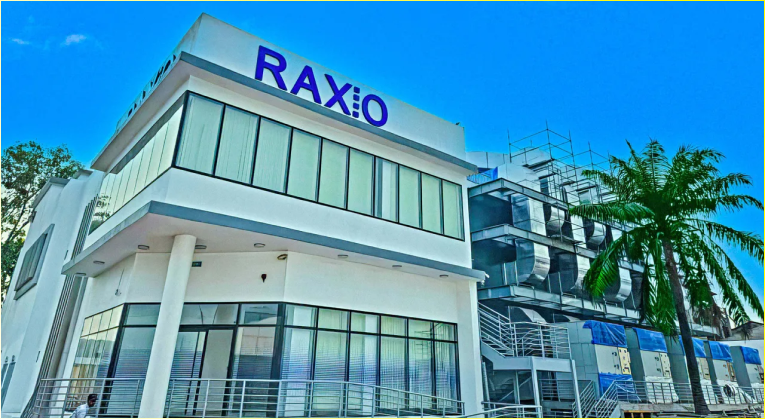
Catalytic infrastructure backing successfully graduated Raxio to major IFC debt.
Source: International Finance Corporation (IFC) Disclosure Portal,
Connecting Africa Corporate Finance Records,
Raxio Group
Imperfection Must Not Become an Excuse for Exploitation
There is, however, an important warning.
Businesses that cannot access conventional finance are vulnerable.
Some investors use this vulnerability to demand excessive returns, punitive security, unreasonable control rights or ownership stakes far beyond the value of the capital being provided.
This is not patient capital. It is opportunism disguised as risk pricing.
Investors deserve to be compensated for genuine risk. But the objective should be to share in the value created, not to capture all of it.
A responsible investment structure must leave the entrepreneur with enough ownership, motivation and economic participation to continue building the business.
It must also avoid conditions that make failure more likely.
Capital cannot claim to be developmental if it extracts value faster than the company can create it.
Conscious capital understands that the quality of the return matters alongside the quantity.
A profitable investment that leaves behind an overleveraged company, a dispossessed founder or widespread job losses may have succeeded financially while failing economically and morally.
The Opportunity Hidden in the Missing Middle
Africa does not suffer from a shortage of entrepreneurial ambition.
It suffers from a shortage of capital designed for the realities entrepreneurs face.
Between microfinance and institutional capital sits a vast missing middle: businesses that are too large to remain informal but too early to satisfy conventional investment criteria.
This is not merely a development problem. It is an investment opportunity.
Markets are often most attractive where information is incomplete, capital is scarce and capable operators are overlooked. Investors willing to build deeper underwriting capabilities, structure capital intelligently and support operational improvement can access enterprises before they become obvious to everyone else.
The return for doing this well is not only financial.
It is the creation of companies that employ people, process local resources, provide essential services, strengthen supply chains and build productive capacity within their communities.
These businesses do not need investors to pretend they are perfect.
They need investors who can see the difference between imperfection and impossibility.
They need capital that arrives in stages, support that builds capability and underwriting that recognises the direction of travel rather than only the condition of the past.
The future of enterprise finance in Africa will not be built by lowering standards.
It will be built by applying better standards.
- Standards that measure viability more accurately.
- Standards that price risk more intelligently.
- Standards that recognise that good businesses are often built through investment, not discovered fully formed.
The most consequential investors may not be those who finance businesses once every box has been ticked.
They may be those who help worthy businesses become strong enough to tick the boxes themselves.